
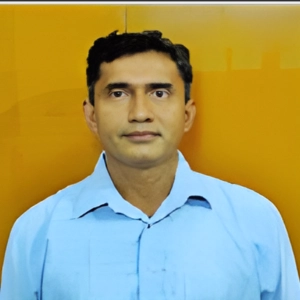
Snehasis Bhunia
Uttar Pradesh University of Medical Sciences, IndiaPresentation Title:
The electrophysiological implication of rectifying the development of diabetes, hypertension, and even cancer through Integrated Approach of Yoga Therapy (IAYT)
Abstract
Background: Lifestyle-related disorders such as diabetes mellitus, hypertension, and cancer (non-communicable diseases) share common underlying mechanisms involving autonomic dysregulation, neuroendocrine imbalance, and altered electrophysiological function, which are major contributors to global morbidity and mortality. The Integrated Approach of Yoga Therapy (IAYT), developed and systematized at Swami Vivekananda Yoga Anusandhana Samsthana, combines physical postures, breathing practices, meditation, relaxation, and lifestyle correction. Emerging evidence indicates that IAYT favorably modulates autonomic nervous system activity and electrophysiological markers such as heart rate variability (HRV), baroreflex sensitivity, and cardiac conduction indices. This paper brings the electrophysiological basis of disease progression in diabetes, hypertension, and cancer, and explains how IAYT may help rectify or slow disease development through autonomic rebalancing and neuro-cardiac modulation.
Methodology: A total of 20 healthy subjects were included in the study. All healthy participants were divided into two groups (A&B) based on their age. There were 10 participants in group A, considered as young healthy adults aged below 40 years, and 10 older healthy adults aged above 50 years were included in group B. All participants in groups A & B were accepted and recorded all non- invasive cardiovascular parameters as experimental control (group C). A 48-week integrated approach of yoga therapy (IAYT) was given as an intervention to the participants come under group A & B. The PC based cardiovascular analyser and PC based PPG analysis system were used to record almost all cardiovascular parameters signifying the status of arterial stiffness index and ankle brachial index at the beginning and end of the yoga program. The arterial stiffness index (ASI) and reflection index (RI) were computed from the pulse data. The data were analysed using the paired-samples t-test.
Results: There was a significant reduction in Pulse Wave Velocity (PWV), ASI (P < 0.05), and no significant alterations (P>0.05) on ABI after IAYT for 6-weeks of IAYT in young and old participants. There was a non-significant reduction in BMI after IAYT in healthy young and older adults, but the ASI was significantly low (P<0.01) in young adults. There were no significant changes in Systolic Blood Pressure (SBP), Diastolic Blood Pressure (DBP), and Pulse Pressure (PP) after IAYT for 6 weeks.
Conclusion: Integrated Approach of Yoga Therapy demonstrates significant potential in rectifying early electrophysiological disturbances underlying diabetes, hypertension, and cancer. Through autonomic rebalancing, vagal enhancement, and neuroendocrine stabilization, IAYT offers a scientifically plausible and measurable pathway for preventive and adjunctive therapeutic benefit. Electrophysiological metrics such as HRV and baroreflex sensitivity should be incorporated into future outcome studies to strengthen the evidence base.
Biography
Snehasis Bhunia was awarded Ph.D degree in Medical Physiology at the age of 31 years from Nagpur University, Maharashtra State, India. He worked in the department of Physiology as 1) Sr Demonstrator for three and half years at University College of Medical Sciences & GTB Hospital, Delhi 2) lecturer & Associate Professor at Mahatma Gandhi Institute of Medical Sciences, Sevagram, Maharastra, India for five and half years and two and half years respectively, 3) Professor for two and half years at Mahatma Gandhi Institute of Medical Sciences, Sevagram, Nashik, Maharastra State, India for two years 4) Professor at Chattisgarh Institute of Medical Sciences, Bilaspur for two years 5) Professor at Uttar Pradesh University of Medical Sciences for seventeen years. He had a total of 33 years of teaching experience and 51 research papers published in reputed journals both in India & abroad. He is revier of many International Journals. He is again doing Ph.D in Yoga with the faculty of Singhania University, Rajasthan, India. His thesis title is “Physiological rectification on development of arterial stiffness through Integrated Approach of Yoga Therapy” to be submitted in May 2023. He loves delivering lecture in any topic in Physiology and Yogic science.

Organization Location
1309 Coffeen Avenue, STE 1200, Sheridan, Wyoming 82801, USA
General Enquiry
contact@scientexconferences.com
Finance Enquiry
finance@scientexconferences.com
Call us at
USA : (+1) 929 224 5068